
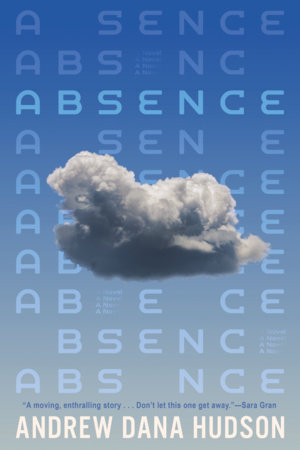
Andrew Dana Hudson’s new novel Absence has a fairly depressing premise and try as he might (and he does not always try) it never really lets up. This is not a criticism for a book that deals directly with issues of grief, loss and belief but it is worth readers’ knowing before picking it up. Absence has been compared to Ben Winters’ The Last Policeman and it has a similar feel of its protagonists falling back on process to try and deal with existential dread. The setup also echoes, in other very specific ways, the TV series The Leftovers.
The world of Absence is one in which people have, for reasons no one understands, started to randomly ‘pop’ out of existence and never return. The process is called a ‘pop’ due to the noise that is the only indication that someone has gone. Harvey Ellis works for the Bureau of Depopulation Affairs, aka DePop, his job is to confirm that people have genuinely popped as the government pays compensation to survivors. Harvey is still scarred by the loss of his parents and fiancé in a ‘clusterpop’ where most of the congregants of a church disappeared at the same time.
The plot of Absence centres around an investigation that Harvey is sent on with partner Shonda to the small town of Dawnville Kansas. A woman in Dawnville called Gabriella claims to have returned from wherever it is the missing go when they pop. Ten years before, Dawnville had promoted itself as a “safe town” where popping would not happen, a reputation it lost with Gabriella’s disappearance. If this woman is telling the truth it could change the way people think about the whole process of ‘popping’, but there are significant ambiguities in her story. Harvey and Shonda often reference the X-File which is a solid call as Harvey desperately wants to believe in the capacity to return while Shonda remains sceptical.
As noted, the world that Hudson has created is a fairly depressing one. People disappear randomly, and those left behind (the remainers) have to pick up the pieces but are also left to wonder when their turn will come. It is a world in gradual but unstoppable decline. As a result, there is plenty of consideration of the nature of grief and how people respond to the loss of loved ones. Hudson makes the point a few times that these reactions are not limited to his world but are part of the world we live in now: people die in random accidents, or disappear for no discernible reason. But his scenario feels like an extreme way to contemplate these issues.
Absence feels a little long and there is a lot of setting up that needs to happen in the first third of the novel. But once the ground rules are set it kicks into gear, Hudson delivers some tense set action pieces and some great revelations. The best aspect of Absence is that Hudson holds back from giving any definitive answers. While this is set up as a procedural investigation, readers may not necessarily get the type of closure that they would normally expect (or need).
Absence is a book that starts dark and never quite reaches the light. But that is not necessarily Hudson’s intention. What he succeeds at is creating a plausible scenario and then exploring all of the ways that humans will respond. In doing so he is able to successfully contemplate the ways in which we deal with real life trauma but in a safely speculative sandpit.
Absence by Andrew Dana Hudson

No Comments
Comments are closed.